Licensed & insured
Licensed and fully insured, and water heaters are the only thing we work on.
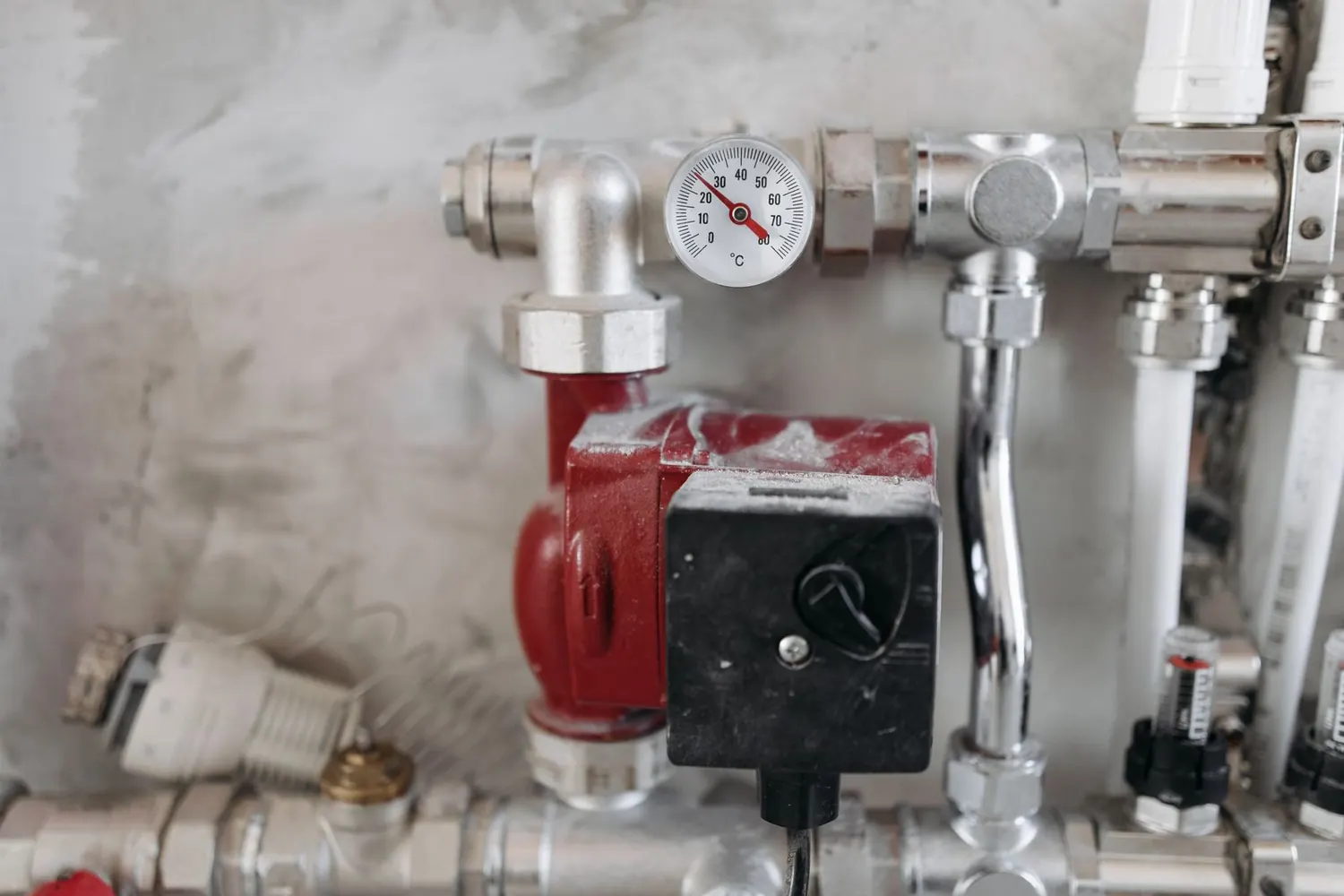
Rocklin, CA · 95677 & 95765 · Annual service & flush
Water hardness varies with your supply, and mineral build-up is what shortens a tank's life. A flush, anode rod check and T&P inspection costs a fraction of a replacement and can help your water heater reach the life it was built for.
Free replacement quotes · $80–$160 diagnostic credited toward the repair
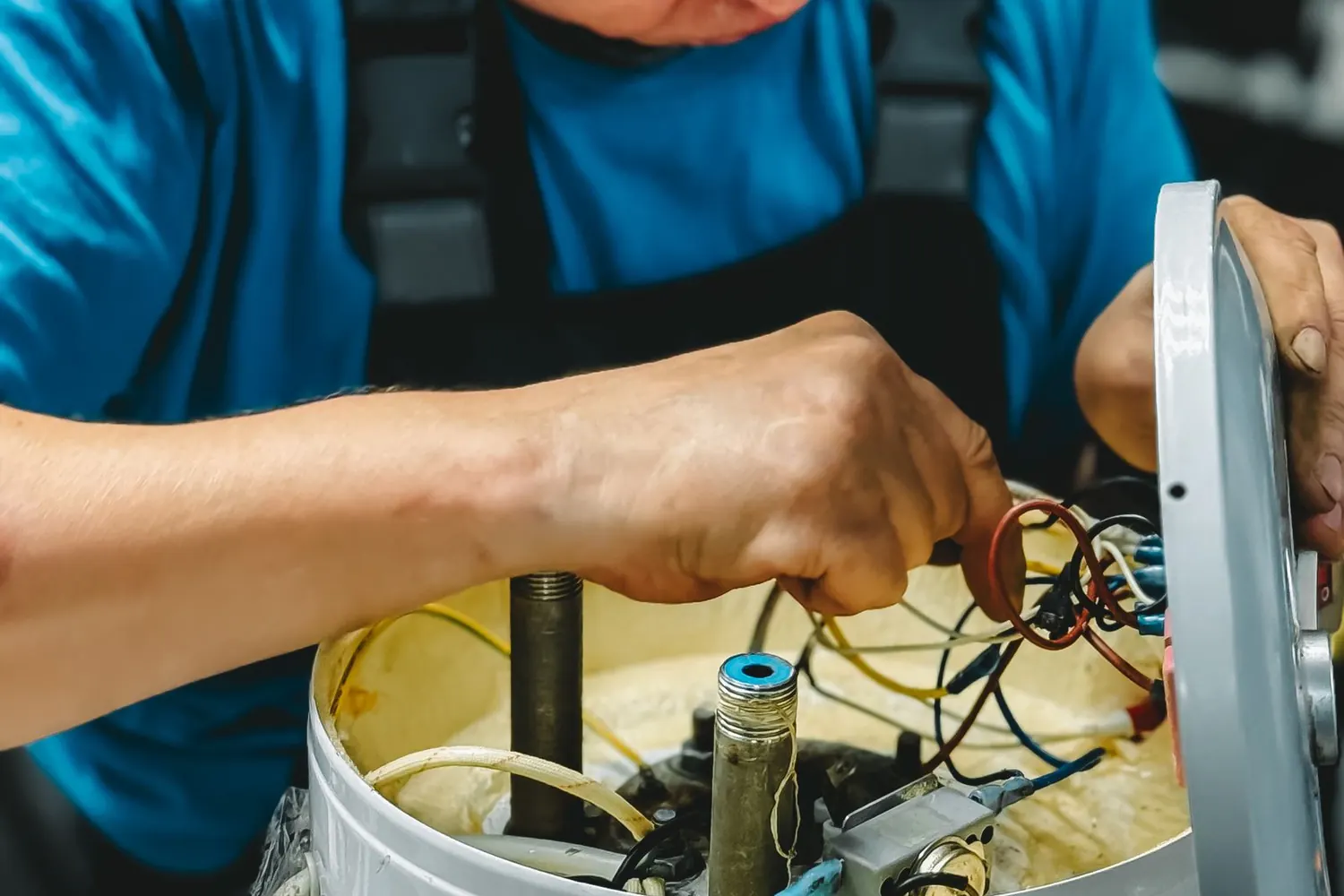
About this service
Water heater maintenance has a reputation as an optional upsell. In a genuinely soft-water area, fair enough. Water hardness varies depending on your provider and household supply, though — we can check your conditions and recommend a schedule that suits them. Where minerals are present, every gallon through the tank leaves a little behind, and over a year that becomes a measurable layer on the bottom of the vessel.
An annual flush and anode check is the cheapest way to delay a replacement.
That layer does three things, all bad. It insulates the water from the burner, so the burner runs longer and your gas bill creeps up. It traps heat against the steel, which stresses the glass lining and accelerates corrosion from the inside. And it creates the popping and rumbling you can hear from the hallway, which is water flashing to steam trapped underneath the sediment. None of that is dramatic on any single day. All of it is why a tank that should have reached fifteen years leaks at nine.
We open up a lot of failed tanks in Whitney Ranch, Stanford Ranch and Sunset Whitney, and the pattern is boringly consistent. The ones that failed early were never flushed and nobody ever looked at the anode rod. A water heater tune-up in Rocklin is the cheapest insurance in the house: one visit a year, roughly the cost of a small repair, against a $1,400 to $3,600 replacement.
Our standard
A service visit is an inspection with a report at the end of it, not a sales call.
Licensed and fully insured, and water heaters are the only thing we work on.
If the anode is fine we put it back and tell you so. You get a report, not a sales pitch.
Anode condition, sediment, measured temperature and static pressure in writing — which matters for warranty claims.
Flushes and tune-ups on gas, electric and heat pump tanks, plus full descaling on Navien, Rinnai, Noritz, Takagi and Rheem tankless units.
From call to complete
Gas control to OFF or the breaker off, the cold inlet valve closed and the tank left to cool properly before anything is opened up.
Drained through a hose routed somewhere safe, with the sediment agitated loose rather than just letting clear water run, then refilled and purged before the heat goes back on.
The rod is pulled and inspected for corrosion and material loss, and replaced according to its condition and the manufacturer’s guidance. The T&P valve is inspected, and tested where the manufacturer’s instructions allow.
On gas units: burner and flame pattern inspected, burner compartment and air inlet screen cleaned, flue draft confirmed, flammable-vapour sensor and thermocouple checked. On electric units: both elements resistance tested, thermostats checked, terminals and wiring inspected for heat damage or corrosion.
California requires water heaters to be properly anchored or strapped against earthquake movement, with strap count and placement set by the applicable code. We check the straps, the drain pan and line, and tap-test the expansion tank — a waterlogged one has stopped protecting your plumbing.
Isolation valves, pump and descaling solution circulated through the heat exchanger, inlet filter screen and air intake cleaned, flame rod inspected, error history read off the board.
Anode condition, sediment volume, measured temperature, static pressure and anything we are watching, left with you in writing. Useful for warranty claims and for knowing when to budget for a replacement.
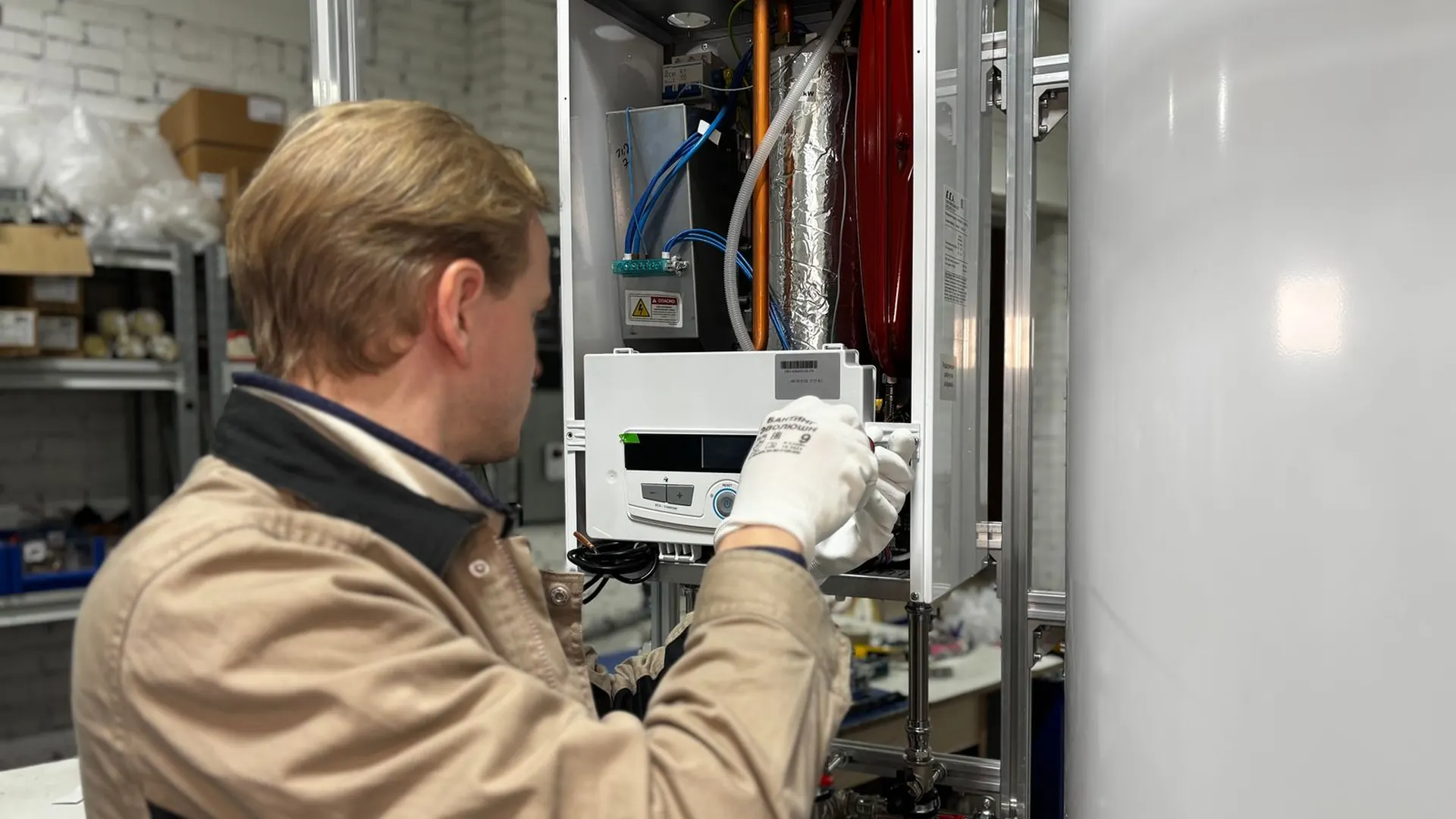
Step 01
Isolate and let the tank coolGas control to OFF or the breaker off, the cold inlet valve closed and the tank left to cool properly before anything is opened up.
What is included
A flush on its own is better than nothing, but it is not a service. These are the items that decide whether a tank reaches the life it was built for.
Tank isolated and cooled, drained through a hose, sediment agitated loose rather than just letting clear water run, then refilled and purged. This is what fixes popping noises and recovers lost efficiency.
We pull the rod and inspect it for corrosion and material loss, then recommend replacement based on its condition and the manufacturer’s guidance. Where it is well consumed it is replaced on the spot. This item decides whether your tank corrodes through early.
Inspected, and tested where the manufacturer’s instructions allow — a deteriorated valve is recommended for replacement rather than cycled. Discharge pipe checked for routing, with no illegal caps or reductions. A seized relief valve on a pressurised tank is the one genuinely dangerous fault.
Checked against a measured outlet temperature, not just the dial position — dials drift. 120F is commonly used to reduce scald risk and energy use. The right setting also depends on the manufacturer’s instructions, who lives in the house and Legionella prevention.
The flush
How much comes out depends on the tank's age, the water conditions and its history. On a neglected tank, usually a lot.
A flush done once, late, is worth far less than one done yearly — a decade of baked-on sediment has already done its damage.
Anode rod
The least understood part of a water heater, and the one that decides its lifespan.
A magnesium or aluminum rod threaded into the top of the tank. It corrodes preferentially so the steel does not.
Corrosion then has nowhere to go but the tank wall — in hard water often inside four or five years, well inside the warranty period.
Nothing looks wrong from the outside. The part costs little — clearance, the right tools and a breaker bar are the barrier.
If you only ever pay for one piece of water heater maintenance, make it an anode rod inspection around year four.
Service plan
The practical problem with annual maintenance is not cost, it is remembering. A standing visit solves that.
We contact you when your unit is due, come out at a time that suits, do the full tune-up and leave the written record.
Nothing added that you did not ask for, and no contract that renews itself without you noticing.
Several units, a tankless system needing descaling, or a rental where failure means an emergency callout. Quoted per unit, in writing.
DIY or pro
Plenty of homeowners flush their own tank, and do it well. The rest of the service is a different matter.
A reasonable middle ground: flush it yourself between visits, and follow your manufacturer's recommended schedule for the professional inspection — annually for many units.
If your water heater is already leaking, smelling unusual or failing to heat properly, that is a repair job rather than maintenance — see water heater repair in Rocklin for diagnostics.
Lifespan
A standard tank in the Rocklin area averages about 10 to 13 years. Corrosion decides where in that range you land.
If something is already wrong — no hot water, noises that survive a flush, an error code on a tankless display — start with water heater repair and we will diagnose it first. Maintenance is for units that are working.
Real results
Water heater maintenance
Hardened sediment sitting on the bottom of a tank that had never been flushed, with water flashing to steam underneath it and the burner running longer than it should.
After: Flushed with the sediment agitated loose rather than just drained, then refilled and purged. A proper flush clears most of it and the noise usually goes with it.
Book this service →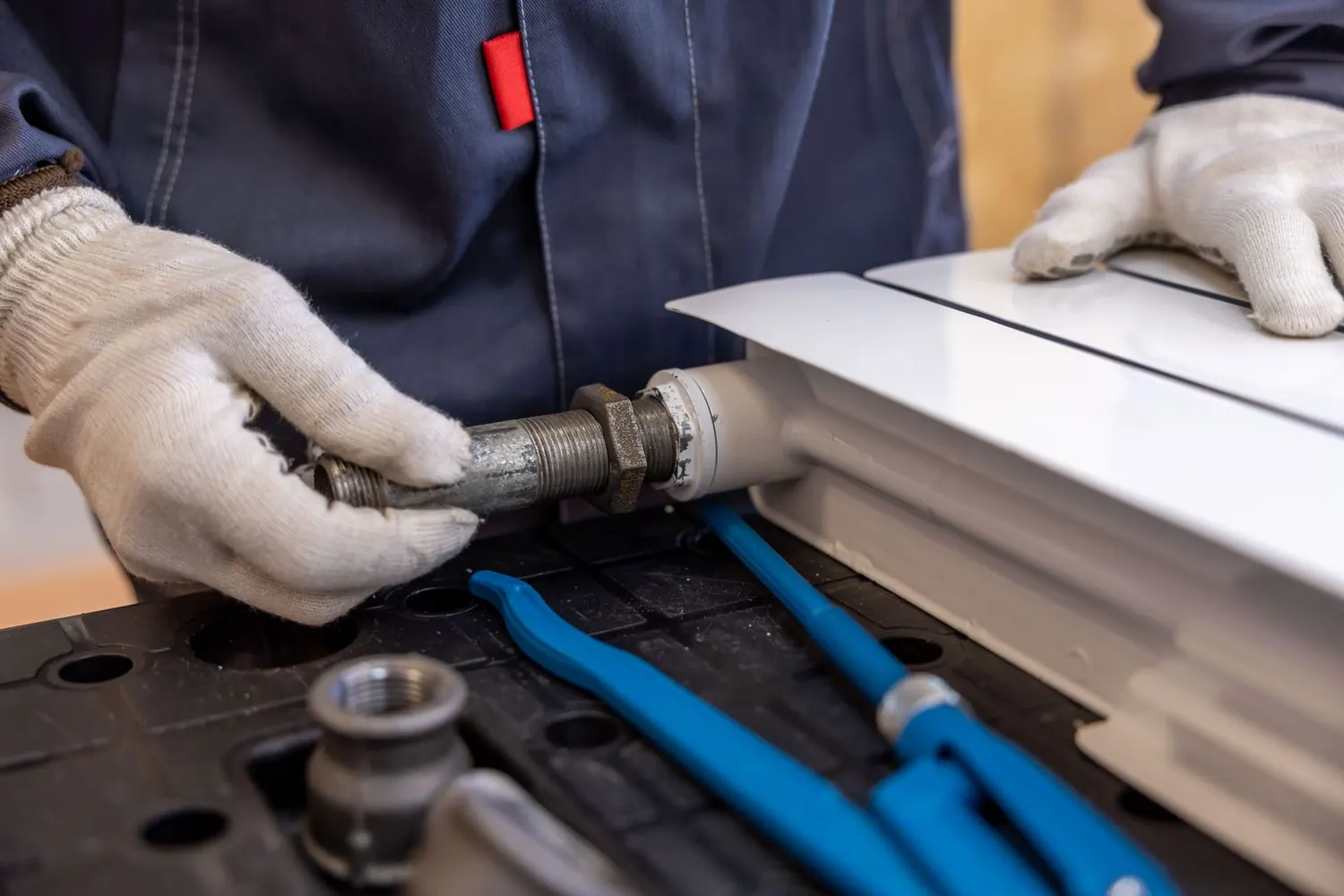
Water heater maintenance
A rod pulled on a mid-life tank and found heavily corroded, leaving the corrosion nowhere to go but the tank wall.
After: Replaced on the spot according to its condition and the manufacturer’s guidance, with the condition written into the service record for the next visit.
Book this service →
Water heater maintenance
A wall-hung unit never descaled since installation, with scale through the heat exchanger and a clogged inlet filter screen.
After: Descaling solution circulated through the exchanger, filter screen and air intake cleaned, flame rod inspected and the error history read off the board.
Book this service →Call before it gets worse
The situations an annual service puts right, and what each one normally involves.
Ask a technician →Hardened sediment on the bottom of the tank with water flashing to steam underneath it. A proper flush with agitation clears most of it. If the noise survives the flush, the sediment has cemented itself and at least you know where you stand.
Sediment insulates the water from the burner, so the burner runs longer and the gas bill creeps up. Clearing it recovers the efficiency you paid for.
A spent anode rod leaves the glass lining undefended and nothing looks wrong from the outside. We inspect the rod for corrosion and material loss and replace it according to its condition and the manufacturer’s guidance.
Transparent pricing
$120 – $500 depending on the service, the unit and access
Pricing factor 01
A flush and sediment removal on its own sits at the bottom of the range. A full tune-up adds the anode inspection, the T&P inspection, thermostat calibration and the applicable safety checks.
Get a quote ↗Pricing factor 02
A tankless descale takes longer than a tank flush because descaling solution has to be circulated through the heat exchanger, so it sits higher. Isolation valves, where the unit does not already have them, are priced separately.
Get a quote ↗Pricing factor 03
Standard garage or utility-closet access is the straightforward case. Tight attic and upstairs-platform installs sit higher. Parts and any additional repairs are quoted separately, in writing, before work begins.
Get a quote ↗| Maintenance service | Typical range |
|---|---|
| Tank flush & sediment removal | $120 – $250 |
| Full tune-up (flush, anode check, T&P test, calibration, safety checks) | $180 – $350 |
| Anode rod replacement | $150 – $300 |
| T&P relief valve replacement | $150 – $300 |
| Brass drain valve upgrade | $150 – $300 |
| Tankless descale & service | $200 – $450 |
| Tankless isolation valve kit fitted | $250 – $500 |
| Thermal expansion tank replacement | $250 – $500 |
| Earthquake strapping brought to code | $120 – $280 |
Ranges reflect Rocklin and Placer County labor rates for 2026 and assume standard garage or utility-closet access. Tight attic and upstairs-platform installs sit higher.
Proof you can check
Once a year for a standard tank, and once a year for a tankless unit too. In the Rocklin and Placer County area the water is hard enough that annual is genuinely the right interval rather than a padded recommendation — we see measurable sediment in twelve months. If you are on a private well, or you have a 75 gallon or larger tank serving a big household, every six to nine months is better.
A full annual service is a flush to clear sediment, an anode rod inspection with replacement where its condition and the manufacturer’s guidance call for it, a temperature and pressure relief valve test, a thermostat check and calibration to 120F, a burner and combustion inspection on a gas unit or an element and thermostat resistance check on an electric one, and an inspection of the earthquake straps, drain pan, expansion tank and venting. A tankless unit gets a descale and a filter screen clean instead of a flush; how often depends on water conditions, usage and the manufacturer’s maintenance schedule.
A flush and sediment removal on its own typically runs $120 to $250. A full tune-up that includes the flush, anode inspection, T&P test, thermostat calibration and a combustion or element check is usually $180 to $350. A tankless descale and service is $200 to $450 because it involves circulating descaling solution through the heat exchanger for an hour. Every figure is confirmed in writing before we start.
Only when it is spent, but you do need somebody to look. The anode is a sacrificial metal rod that corrodes so your tank does not. How fast it is consumed depends on water chemistry, tank design and usage, which is why it needs looking at rather than guessing. Replacing the rod at the right moment is one of the cheapest ways to protect a tank.
We set tanks to 120F. That is hot enough for showers and dishwashers, cool enough to reduce scald risk for children and older adults, and it slows both scale formation and standby heat loss. Going much below 120F is not advisable because it moves the tank into the range where bacteria survive more easily. Going to 140F buys you a little more effective capacity but costs more to run and scales up faster.
You can, and plenty of homeowners do it well. Turn the gas control off or kill the breaker, shut the cold inlet, let the tank cool, connect a hose to the drain valve, open a hot tap to break the vacuum, then drain and refill. The honest warnings: old plastic drain valves often will not re-seal once sediment passes them, hardened sediment frequently blocks the drain and needs agitating, and refilling a gas tank without purging the air properly can leave you relighting a pilot. DIY covers the flush. It does not cover the anode rod, the T&P test or the combustion check, which are the parts that actually prevent failures.
It helps. Some manufacturers specify maintenance requirements or list exclusions relating to sediment and corrosion, so check your model’s warranty documentation for the conditions that apply to you. If you ever need to make a warranty claim, a documented service history is what makes it go smoothly. We leave a written service record after every visit for exactly that reason.
Usually, yes. Popping, rumbling and kettling noises are hardened sediment on the bottom of the tank, with water flashing to steam underneath it. A proper flush with agitation clears most of it and the noise goes with it. If the noise persists after a flush, the sediment has cemented itself and the tank is on borrowed time — but you will at least know where you stand.
We will not promise you a number, because installation quality, water chemistry and usage all matter. What we can say from the units we open up is that a tank flushed annually with the anode replaced when due routinely gets past the 10 to 13 year local average, and a neglected tank in hard water often does not reach ten. The maintenance costs a small fraction of a replacement either way.
More services
No hot water, leaks, error codes, pilot and thermostat faults on tank and tankless units.
Old or failed tank swapped for a correctly sized unit, permitted and code compliant.
New gas, electric and heat pump water heater installs with strapping, pan and venting done right.
Error codes, scale build-up, ignition and flow sensor faults on Rinnai, Navien, Noritz and Rheem.
Coverage
Water heater maintenance is available across Rocklin, California — ZIP codes 95677 and 95765 — including Whitney Ranch, Stanford Ranch, Sunset Whitney, Springfield at Whitney Oaks and the surrounding neighborhoods. Contact us to confirm availability at your address.
A flush, an anode check and a T&P test now costs a fraction of a replacement later. Call us or send a message and we will find a time.
Request an appointment
Tell us what the water heater is doing and where it lives. We come back with an arrival window and a price range before anyone drives out.